Both words mean your coverage is ending, but they happen at different times and under different rules. Knowing the difference tells you what notice you are owed and what to do next.
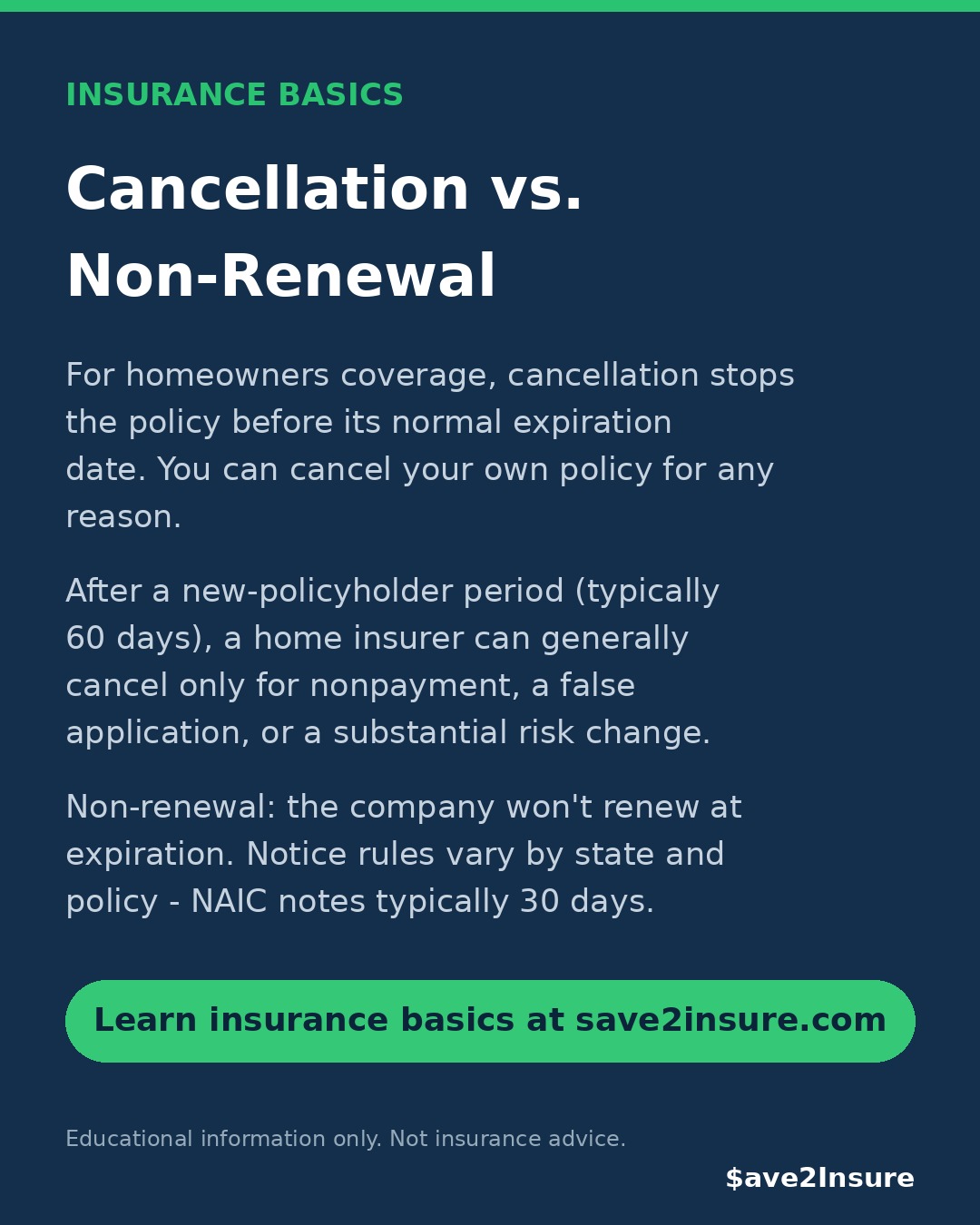
Cancellation means coverage stops before the policy's normal expiration date, which is usually 12 months after it starts. Two directions to know:
If a policy is canceled, the company must give you notice. How many days varies by state. You may also get a partial premium refund.
Non-renewal means the company decides not to continue your policy after it expires. Insurance companies generally have the right not to renew, but they must give you notice first, typically 30 days before the renewal date, though the exact number of days varies by state. You can ask the insurer for the reason. And it works both ways: you can choose not to renew too.
If a cancellation or non-renewal leaves you without options, the NAIC suggests contacting your state insurance department to ask about a FAIR Plan, wind pool, or other residual market program in your state.
This article expands on the Save2Insure daily card from November 14, 2026, first shared on our social channels. Educational information only; not insurance advice.
Important. Save2Insure is not an insurance company or a licensed insurance agency. We do not sell insurance, issue quotes, or give insurance advice or recommendations. This page is general information only. Coverage, prices and rules vary by state, insurer and person, so check with a licensed agent or your state insurance department before you decide.
We may receive compensation when you click a link or apply with a provider. This does not change the price you pay.