
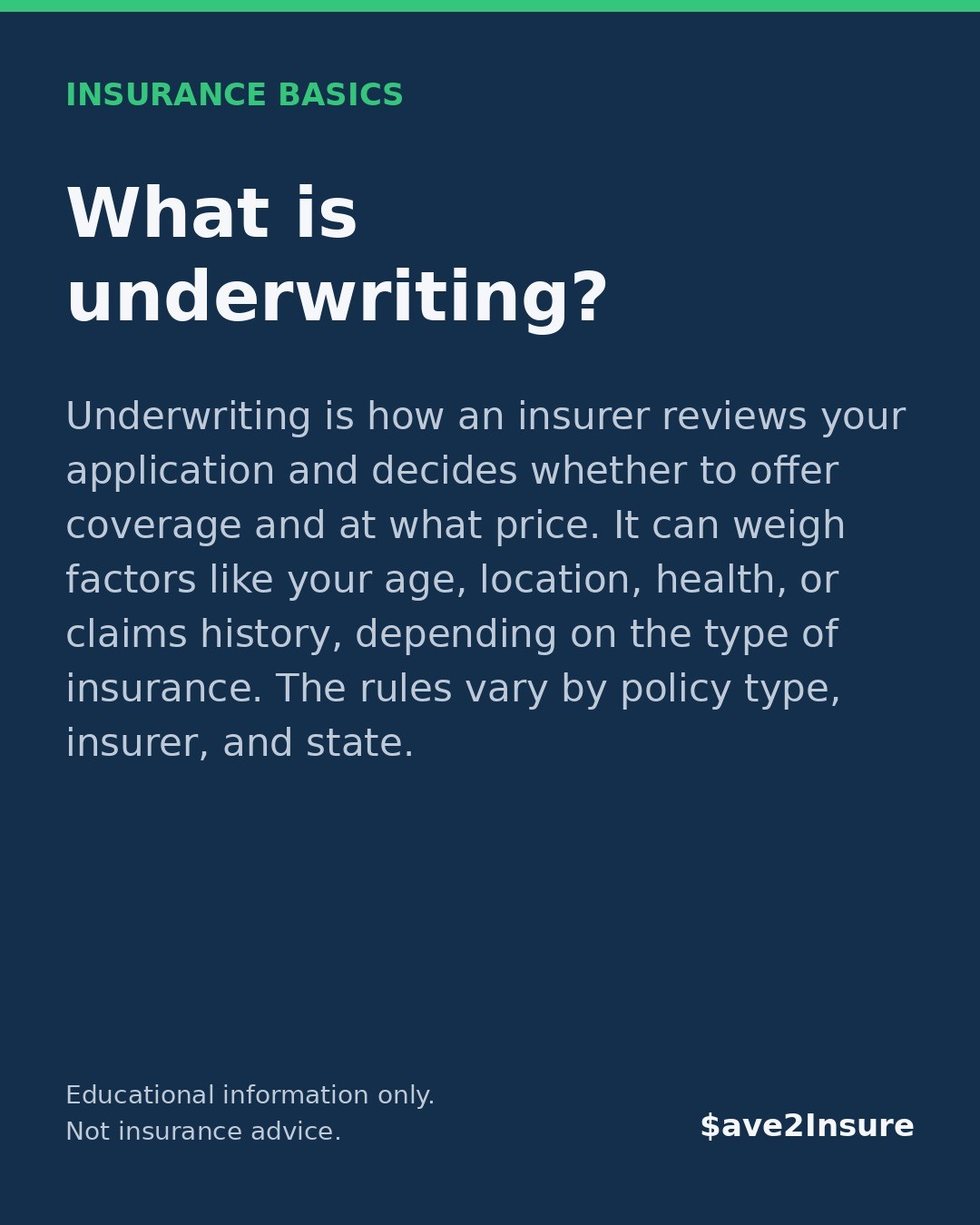
Underwriting is how an insurance company reviews your application and decides two things: whether to offer you coverage, and at what price. It is the reason two people can ask the same company for the same policy and get different answers.
The NAIC splits pricing into two steps. Underwriting assesses the risk of covering you and groups you with similar risks; the insurer decides whether to accept the application. Rating then assigns the price, based on what the insurer believes it will cost to take on the potential claims of that group.
The factors depend on the type of insurance and on state rules. For auto: driving record, location, vehicle make and model, annual mileage, and prior coverage history. For home: the property's construction, age, and location, plus your claims history (often pulled from a C.L.U.E. report). For life and health: age and health history play a larger role. Some states restrict which factors insurers may use, and whether credit-based insurance scores count.
This article expands on the Save2Insure daily card from October 22, 2026, first shared on our social channels. Educational information only; not insurance advice.
Important. Save2Insure is not an insurance company or a licensed insurance agency. We do not sell insurance, issue quotes, or give insurance advice or recommendations. This page is general information only. Coverage, prices and rules vary by state, insurer and person, so check with a licensed agent or your state insurance department before you decide.
We may receive compensation when you click a link or apply with a provider. This does not change the price you pay.