
When a home policy pays a claim, it values your damaged property one of two ways: actual cash value or replacement cost. The difference decides how far the payout goes, so it is worth knowing which one your policy uses before you ever file a claim.
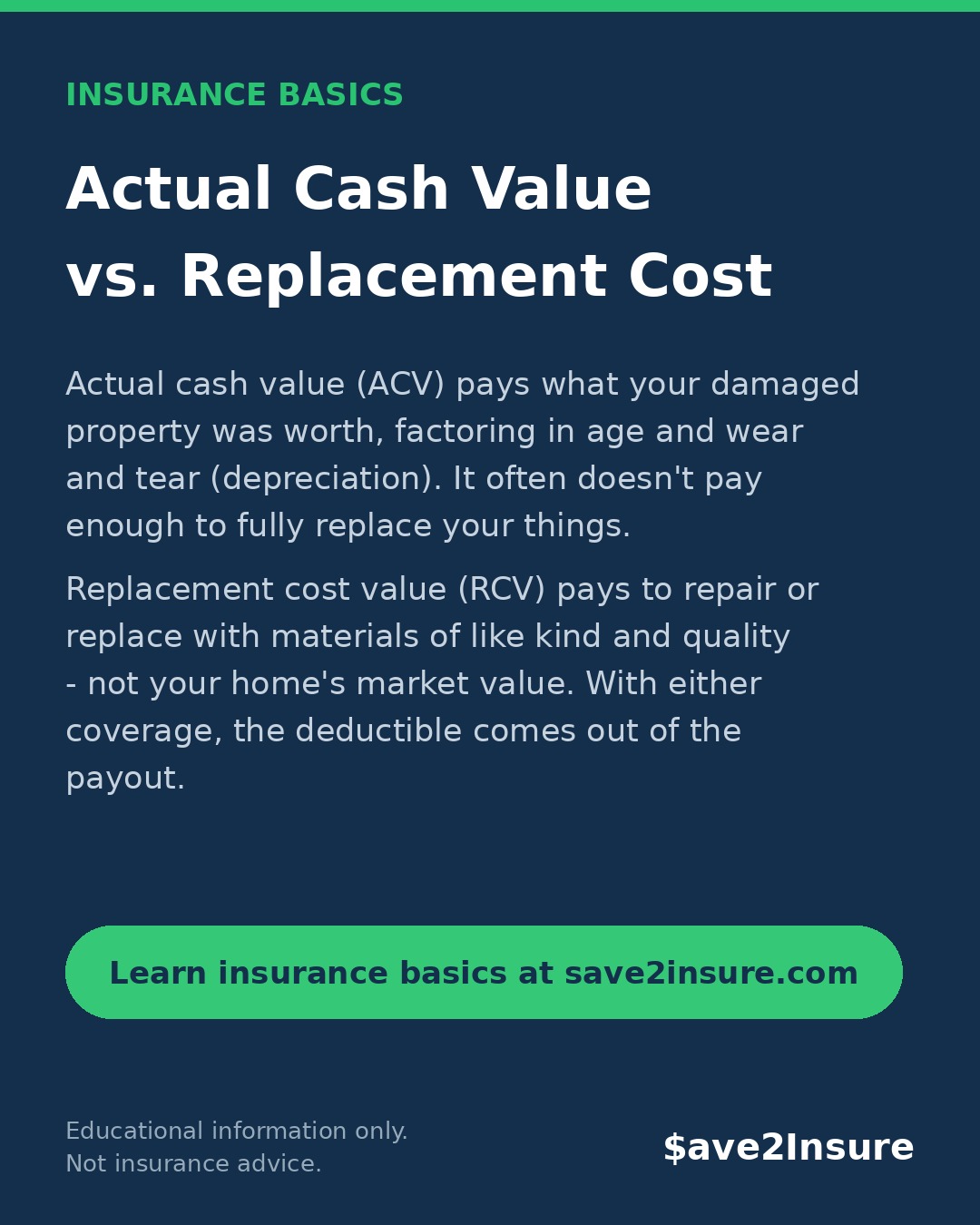
Actual cash value coverage pays what your damaged property was worth at the time of the loss, factoring in its age and wear and tear. That subtraction is depreciation. ACV coverage pays for your loss, but often does not pay enough to fully replace the property or repair the damage.
Replacement cost coverage pays to repair or replace your damaged property using materials of a like kind and quality, without subtracting for depreciation. One thing to keep straight: replacement cost is not the same as your home's market value. Market value includes the price of the land and moves with the real estate market. Replacement cost is about what it takes to rebuild or repair.
The NAIC walks through a simple example. Say a family has $10,000 worth of damage to their home:
Either way, the deductible (the amount you pay out of pocket before insurance kicks in) comes out of the payout.
Check your policy's declarations page or ask your insurer. If you want help deciding between the two, the NAIC suggests contacting your state's department of insurance or your insurance agent.
This article expands on the Save2Insure daily card from November 1, 2026, first shared on our social channels. Educational information only; not insurance advice.
Important. Save2Insure is not an insurance company or a licensed insurance agency. We do not sell insurance, issue quotes, or give insurance advice or recommendations. This page is general information only. Coverage, prices and rules vary by state, insurer and person, so check with a licensed agent or your state insurance department before you decide.
We may receive compensation when you click a link or apply with a provider. This does not change the price you pay.