
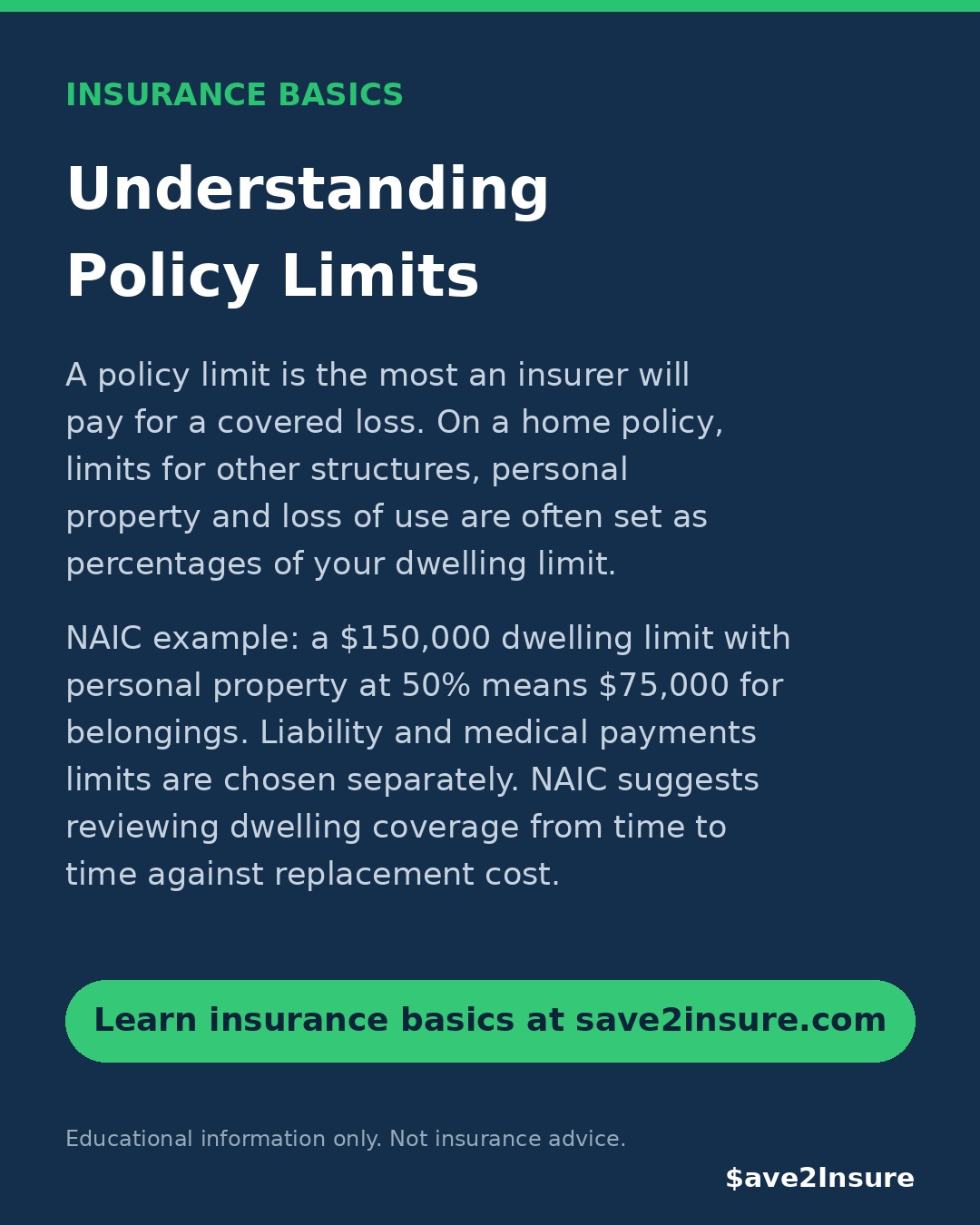
A policy limit is the most your insurer will pay for a covered loss. On a homeowners policy, some limits are yours to choose and some are set automatically as a percentage of another number. Knowing which is which keeps surprises out of a claim.
Coverage for other structures (fences, sheds, detached garages), personal property (your belongings), and loss of use (temporary living expenses) is usually expressed as a percentage of your dwelling limit. The NAIC's example: a $150,000 dwelling limit with personal property at 50% means $75,000 of coverage for your belongings.
The NAIC's typical breakdown:
Your policy may use different percentages, so check your own declarations page rather than relying on the typical numbers.
Personal liability and medical payments limits are chosen on their own, not derived from the dwelling number. So is your deductible.
The NAIC advises that dwelling coverage should equal the full replacement cost of your home, and suggests reviewing it from time to time so it does not drift below replacement cost as rebuilding prices change. Some insurers offer an inflation guard endorsement that raises the dwelling limit annually in line with inflation.
This article expands on the Save2Insure daily card from November 11, 2026, first shared on our social channels. Educational information only; not insurance advice.
Important. Save2Insure is not an insurance company or a licensed insurance agency. We do not sell insurance, issue quotes, or give insurance advice or recommendations. This page is general information only. Coverage, prices and rules vary by state, insurer and person, so check with a licensed agent or your state insurance department before you decide.
We may receive compensation when you click a link or apply with a provider. This does not change the price you pay.