
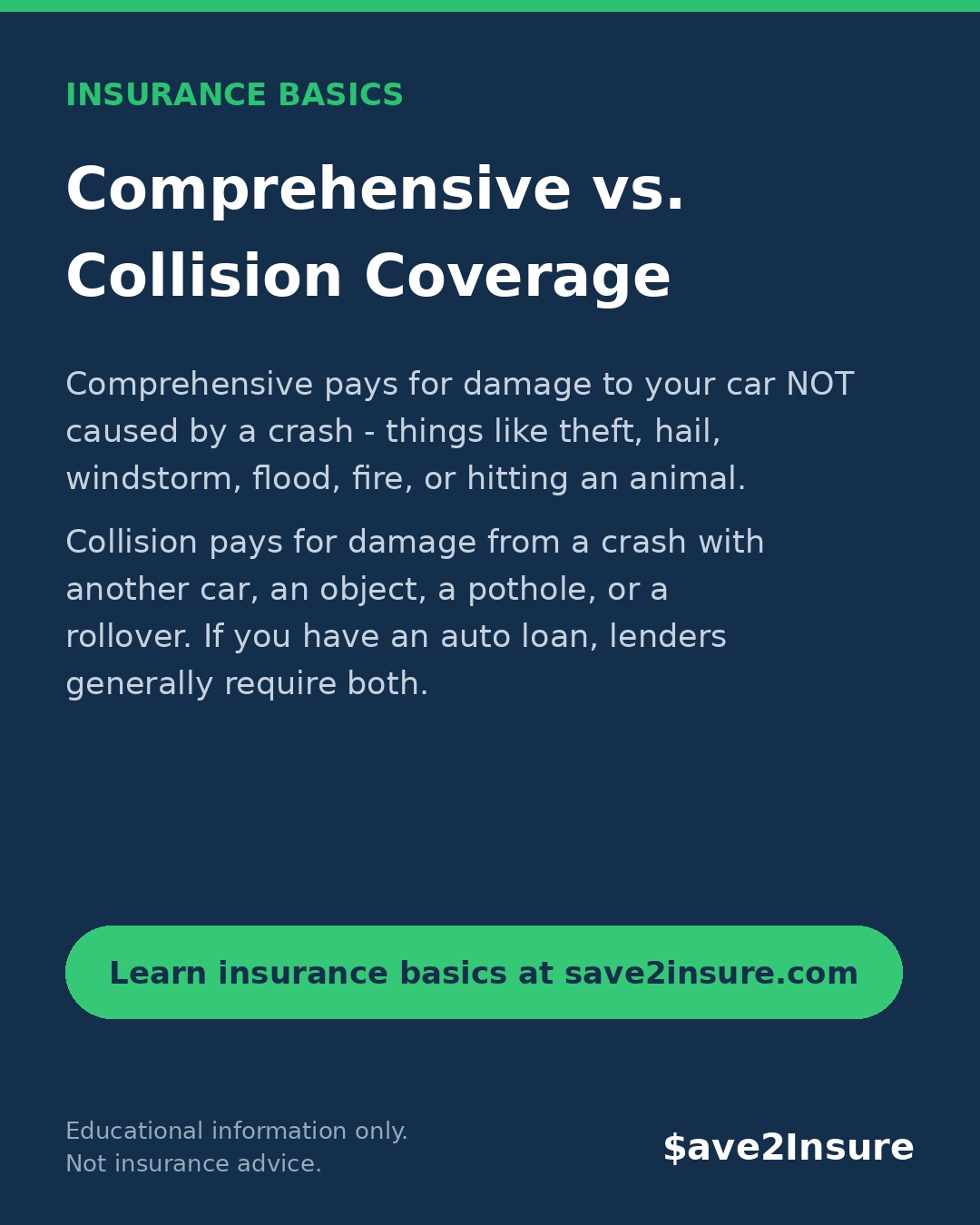
Comprehensive and collision are the two coverages that pay for damage to your own car. They sound similar, but they pay for different kinds of damage, and neither one is required by law.
Collision coverage pays for damage to your car from a collision: hitting another car, hitting an object like a tree or a pothole, or flipping over. It applies no matter who was at fault.
Comprehensive coverage pays for damage to your car that is not caused by a crash. The NAIC's list includes theft, hail, windstorm, flood, fire, and hitting an animal. Comprehensive also covers broken glass, such as windshield damage.
Not by law. Both are optional coverages you choose to add. But if you have an auto loan or lease, your lender generally requires you to carry both, which is what people mean when they say "full coverage." The lender wants the car (its collateral) protected until the loan is paid off.
With an older car, the cost of repairs can quickly exceed what the car is worth. In that case insurers will usually "total" the car and pay you what it was worth rather than fixing it. That payout comes from whichever coverage applies to the damage, minus your deductible.
This article expands on the Save2Insure daily card from November 2, 2026, first shared on our social channels. Educational information only; not insurance advice.
Important. Save2Insure is not an insurance company or a licensed insurance agency. We do not sell insurance, issue quotes, or give insurance advice or recommendations. This page is general information only. Coverage, prices and rules vary by state, insurer and person, so check with a licensed agent or your state insurance department before you decide.
We may receive compensation when you click a link or apply with a provider. This does not change the price you pay.