
Your liability coverage pays for damage you cause to other people. But what happens when the driver who hits you has no insurance, or not enough of it? That is the gap uninsured and underinsured motorist coverage fills.
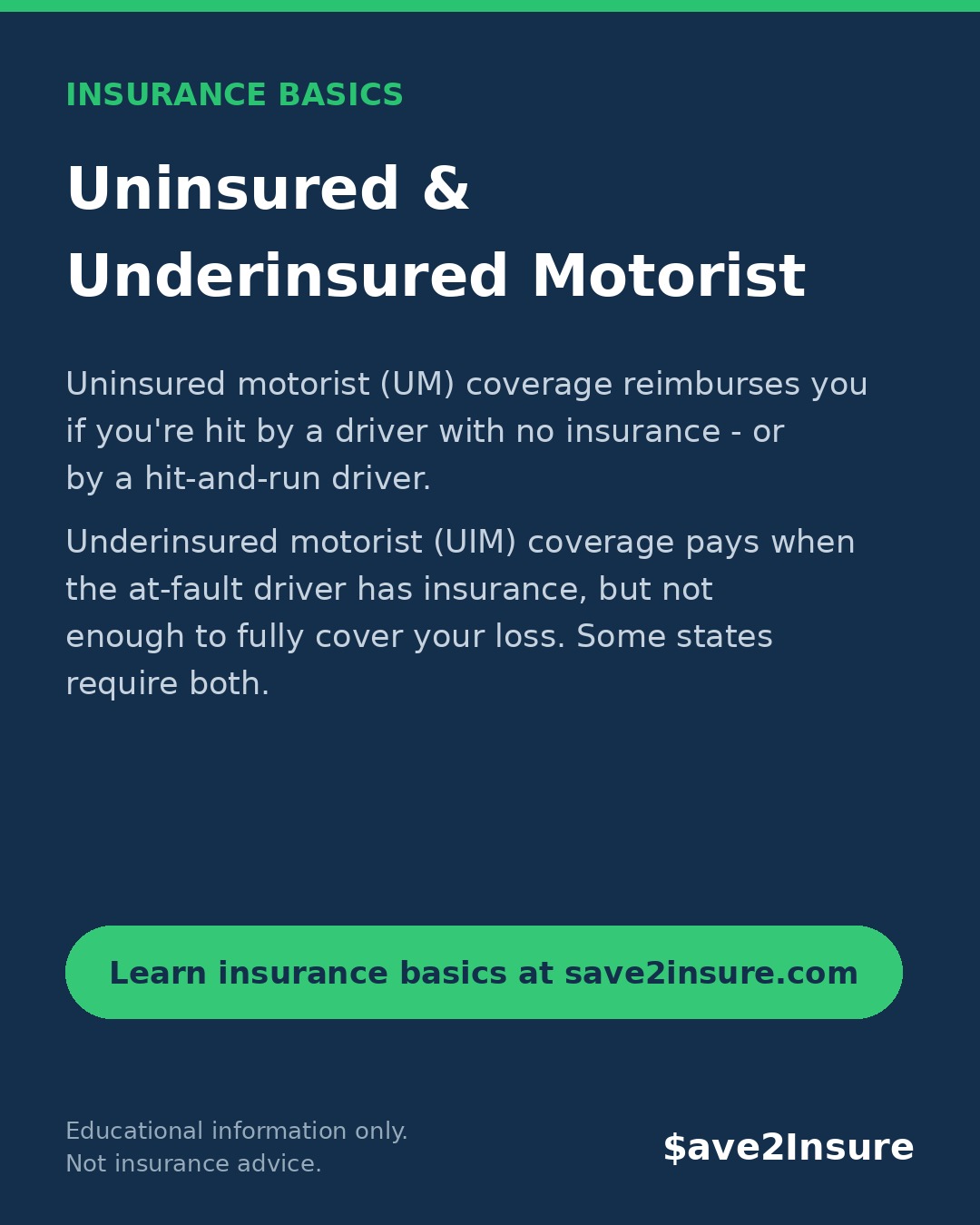
Uninsured motorist coverage reimburses you if you are hit by a driver with no insurance, or by a hit-and-run driver who is never identified. Without it, you could be left paying for injuries and damage someone else caused.
Underinsured motorist coverage pays when the at-fault driver has insurance, but their policy limits are not high enough to fully cover your loss. Their policy pays up to its limit, and your UIM coverage picks up the rest, up to your own limit.
In some states, yes. Some states require you to carry uninsured and underinsured motorist coverage; in others it is optional. Your policy's declarations page shows whether you have it and at what limits.
These coverages are mostly discussed around injuries, but the NAIC notes uninsured motorist property damage coverage can also pay for your car if an uninsured driver totals it. If you carry collision coverage instead, your collision coverage pays, and either way you would generally pay a deductible.
This article expands on the Save2Insure daily card from November 3, 2026, first shared on our social channels. Educational information only; not insurance advice.
Important. Save2Insure is not an insurance company or a licensed insurance agency. We do not sell insurance, issue quotes, or give insurance advice or recommendations. This page is general information only. Coverage, prices and rules vary by state, insurer and person, so check with a licensed agent or your state insurance department before you decide.
We may receive compensation when you click a link or apply with a provider. This does not change the price you pay.