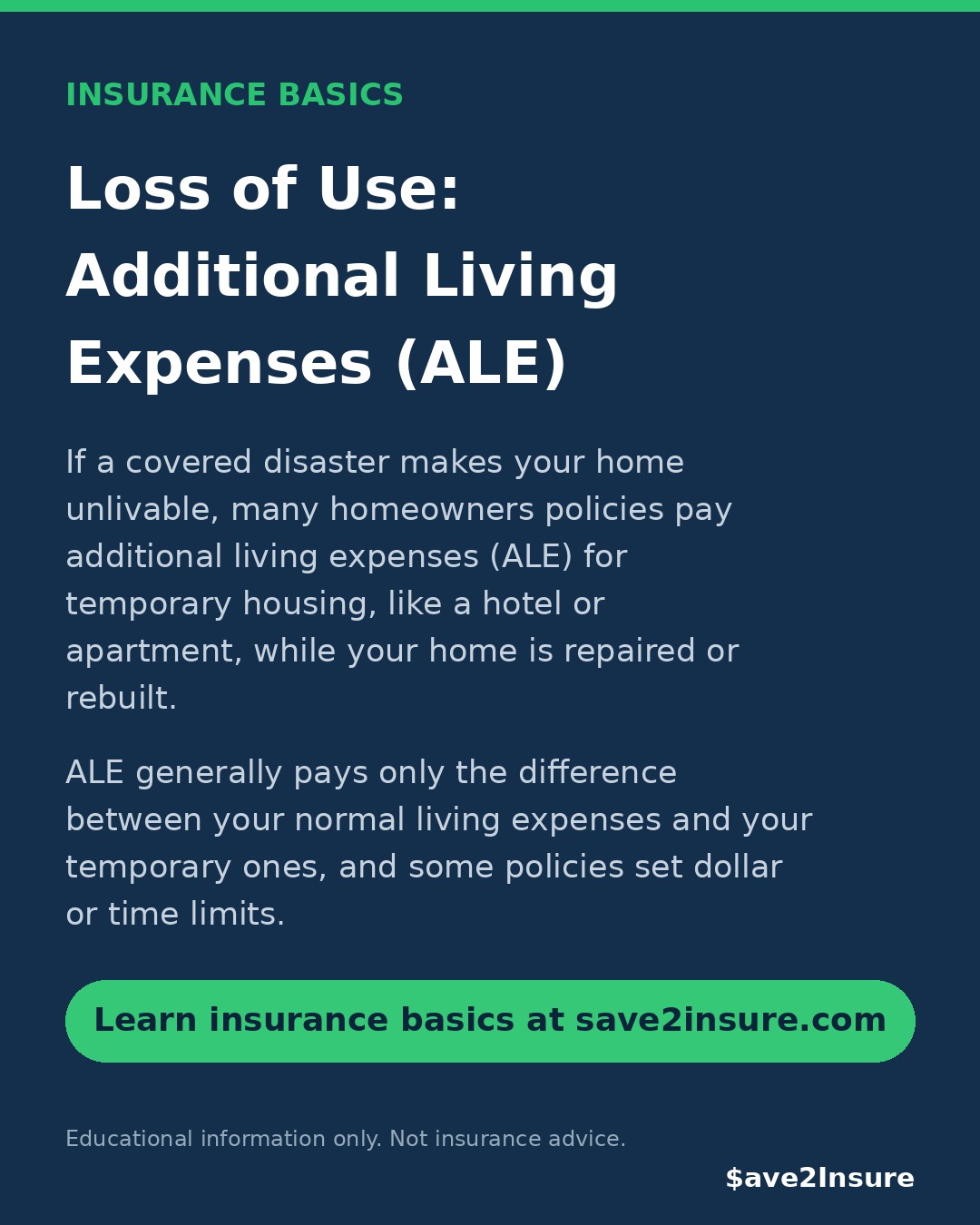
If a fire or another covered disaster makes your home unlivable, your costs do not stop. They grow. Loss of use coverage, also called additional living expenses (ALE), is the part of a homeowners policy built for exactly that stretch of time.
ALE helps pay living expenses that go beyond your normal living expenses while your home is repaired or rebuilt. It does not pay all of your living expenses, only the difference between what you normally spend and what the temporary situation costs. The NAIC's typical examples:
Your mortgage payment stays your responsibility throughout.
The insurance company needs receipts to reimburse you. Keep all of them for any additional costs from the day you leave the home.
Some policies set a dollar limit on ALE, some set a time limit, and some set both. These limits are separate from the coverage that rebuilds your home and replaces your belongings. Ask your agent, company, or adjuster what your policy covers and which limits apply before you need it.
One caution from the NAIC's consumer guide: loss of use only follows covered perils. If your policy does not cover the event that made your home unlivable (an excluded peril like an earthquake on a standard policy), it will not pay loss of use either.
This article expands on the Save2Insure daily card from November 9, 2026, first shared on our social channels. Educational information only; not insurance advice.
Important. Save2Insure is not an insurance company or a licensed insurance agency. We do not sell insurance, issue quotes, or give insurance advice or recommendations. This page is general information only. Coverage, prices and rules vary by state, insurer and person, so check with a licensed agent or your state insurance department before you decide.
We may receive compensation when you click a link or apply with a provider. This does not change the price you pay.