
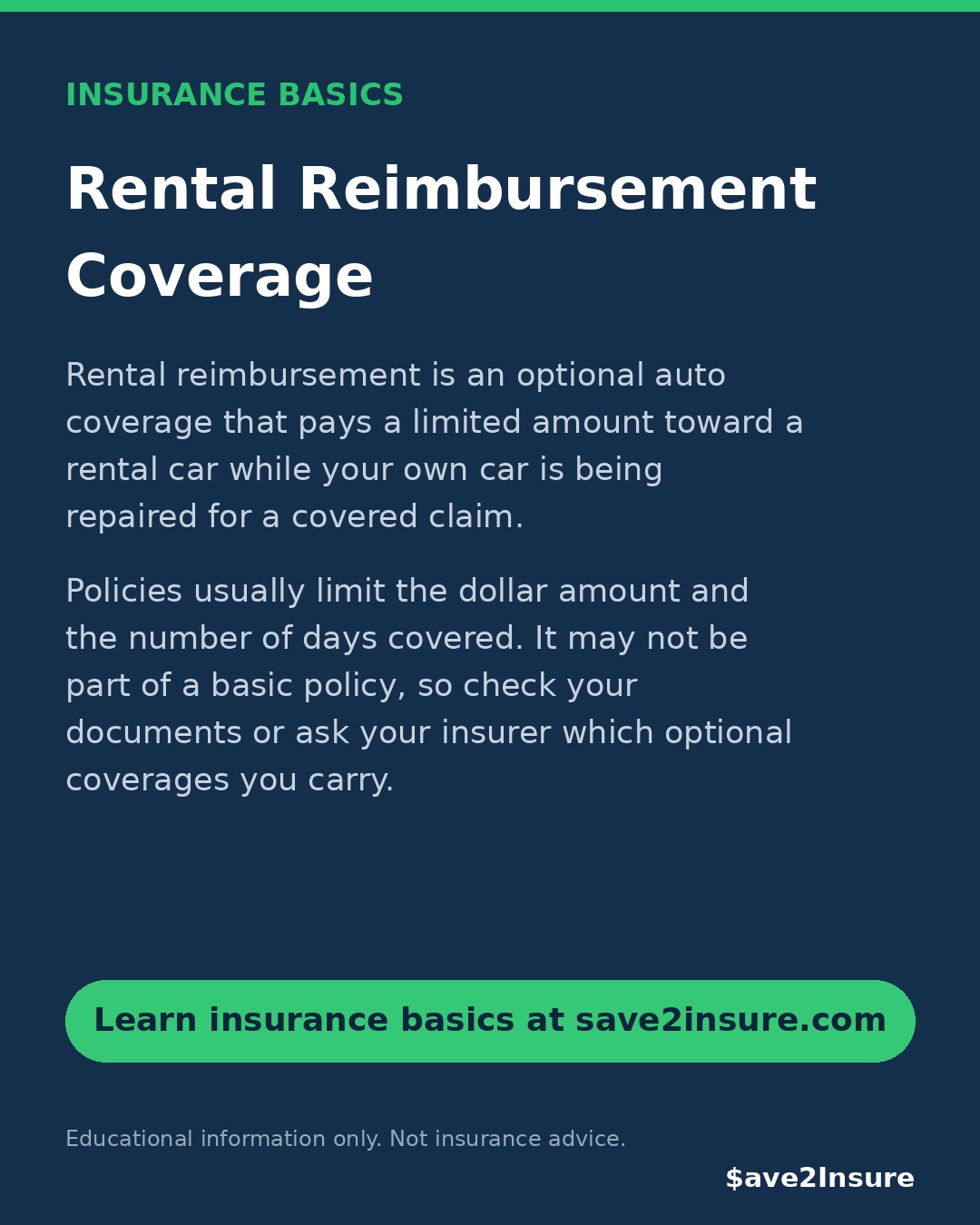
Your car is in the shop for two weeks after an accident. How do you get to work? The answer depends on whose policy pays and whether the right coverage is in place.
When the claim is against the other driver's company, the NAIC says that company should pay your rental car cost for a reasonable length of repair time. If your car is totaled, many companies pay for a rental as a courtesy, but they are not required to, and your right to a rental generally ends once a settlement has been offered.
When the claim is against your own collision or comprehensive coverage, your company pays for a rental only if you bought rental reimbursement coverage. It is an optional add-on, not part of a basic policy.
Policies usually limit rental reimbursement in two ways: a dollar amount per day and a maximum number of days (or a total cap). Those limits are spelled out in your policy. If repairs run long, you could cover the extra days yourself.
Some credit cards include collision and theft protection for rentals, but the NAIC notes those benefits are usually secondary, paying only after other insurance is exhausted. If your policy lacks rental coverage, ask your insurer about adding it; riders like this are often available for a small additional premium.
This article expands on the Save2Insure daily card from November 7, 2026, first shared on our social channels. Educational information only; not insurance advice.
Important. Save2Insure is not an insurance company or a licensed insurance agency. We do not sell insurance, issue quotes, or give insurance advice or recommendations. This page is general information only. Coverage, prices and rules vary by state, insurer and person, so check with a licensed agent or your state insurance department before you decide.
We may receive compensation when you click a link or apply with a provider. This does not change the price you pay.