
Both term and whole life pay a death benefit to your named beneficiaries if you die while the policy is in effect. The difference is how long the coverage lasts and what else the policy does along the way.
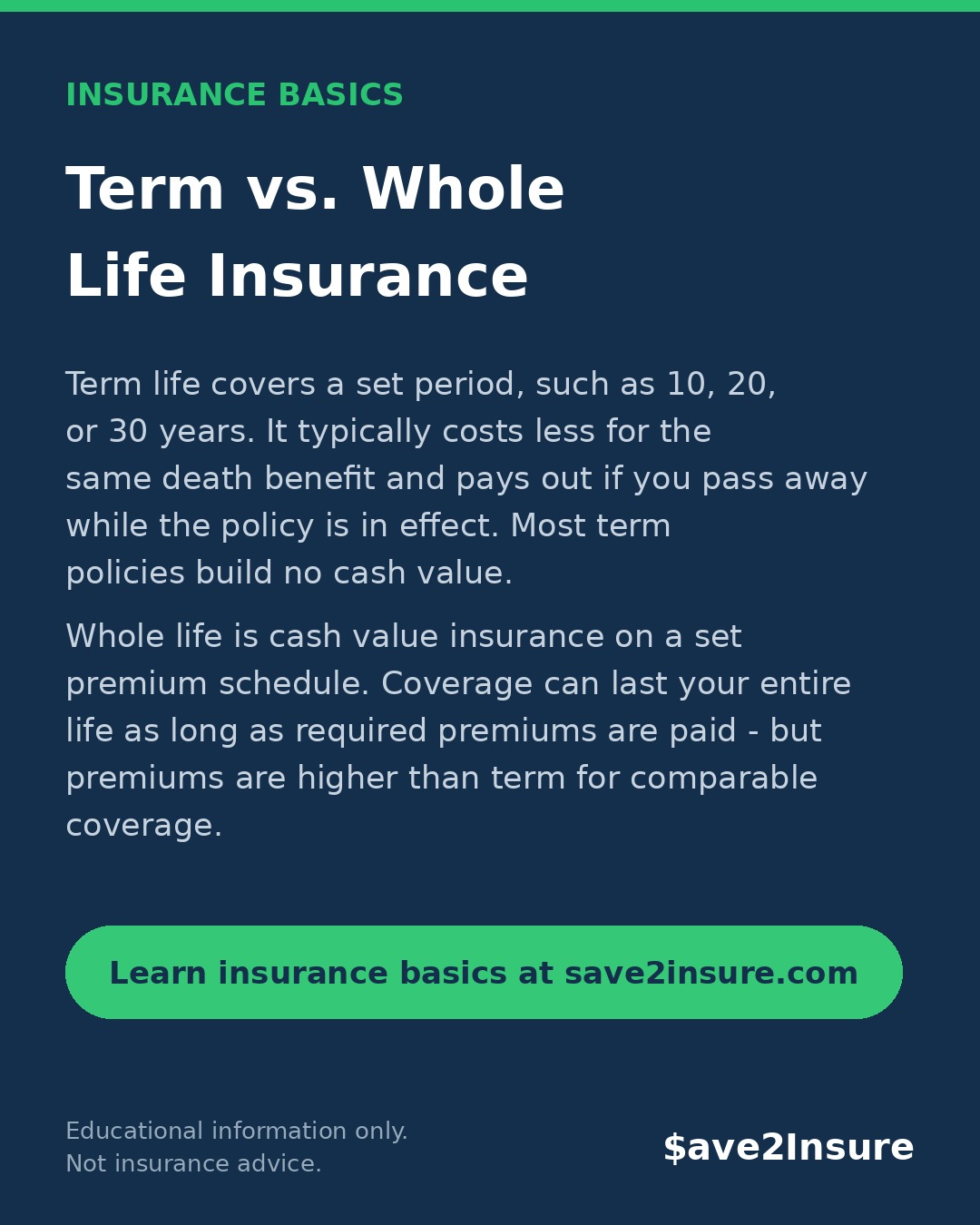
Term life insurance is bought for a period of time: 10, 20, or 30 years, for example. It pays only if you die during the term, and it is intended to provide lower-cost coverage for a specific period. The NAIC notes some term policies include a renewal provision that lets coverage continue at the end of the term even if your health has changed, but the renewed premiums may be higher, and the right to renew can end at a certain age.
Whole life is a type of cash value policy. It can last your entire life as long as required premiums are paid, and it builds cash value, a savings or investment feature that lets owners get money from the policy while still alive. Universal life and variable life are other types of cash value policies. The cost: premiums are higher than term for comparable coverage.
Either way, both types can be modified with riders for an added premium, and the beneficiary designations decide where the money goes.
This article expands on the Save2Insure daily card from October 30, 2026, first shared on our social channels. Educational information only; not insurance advice.
Important. Save2Insure is not an insurance company or a licensed insurance agency. We do not sell insurance, issue quotes, or give insurance advice or recommendations. This page is general information only. Coverage, prices and rules vary by state, insurer and person, so check with a licensed agent or your state insurance department before you decide.
We may receive compensation when you click a link or apply with a provider. This does not change the price you pay.