
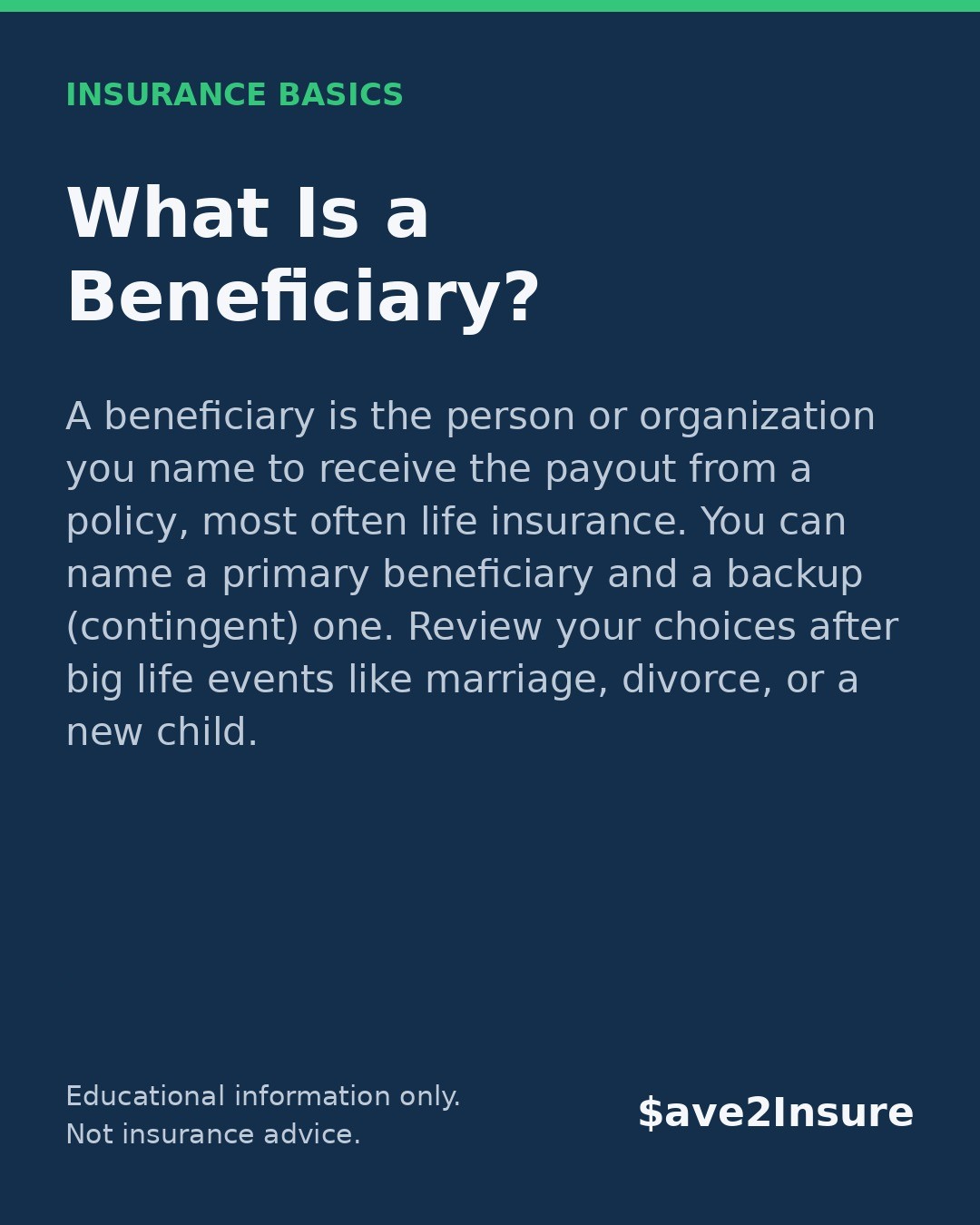
A beneficiary is the person or organization you name to receive the payout from a policy. The term comes up most with life insurance, where the whole point of the policy is paying the named beneficiaries when the insured person dies.
You can name one or more beneficiaries and split the payout between them. The primary beneficiary is first in line. A contingent (backup) beneficiary receives the money if the primary cannot, for example if the primary dies before you do. Naming a contingent is cheap insurance against the payout landing in court.
Beneficiaries can be individuals (a spouse, children, anyone) or an organization, such as a trust or a charity. The NAIC also notes that a policy is usually bought by the person whose life is insured, but spouses or anyone with an insurable interest can take one out.
Beneficiary designations do not update themselves. Marriage, divorce, a new child, or a death in the family can all make an old designation wrong, and the designation on file generally controls the payout regardless of what a will says. Review after every major life event and every few years regardless. Updating is usually a short form from the insurer.
This article expands on the Save2Insure daily card from October 26, 2026, first shared on our social channels. Educational information only; not insurance advice.
Important. Save2Insure is not an insurance company or a licensed insurance agency. We do not sell insurance, issue quotes, or give insurance advice or recommendations. This page is general information only. Coverage, prices and rules vary by state, insurer and person, so check with a licensed agent or your state insurance department before you decide.
We may receive compensation when you click a link or apply with a provider. This does not change the price you pay.